
INSTRUEX / INSIGHTS
HPLC or UHPLC? Compare the Method, Not the Label
A practical checklist for matching chromatography hardware to existing methods, samples, and acceptance criteria.
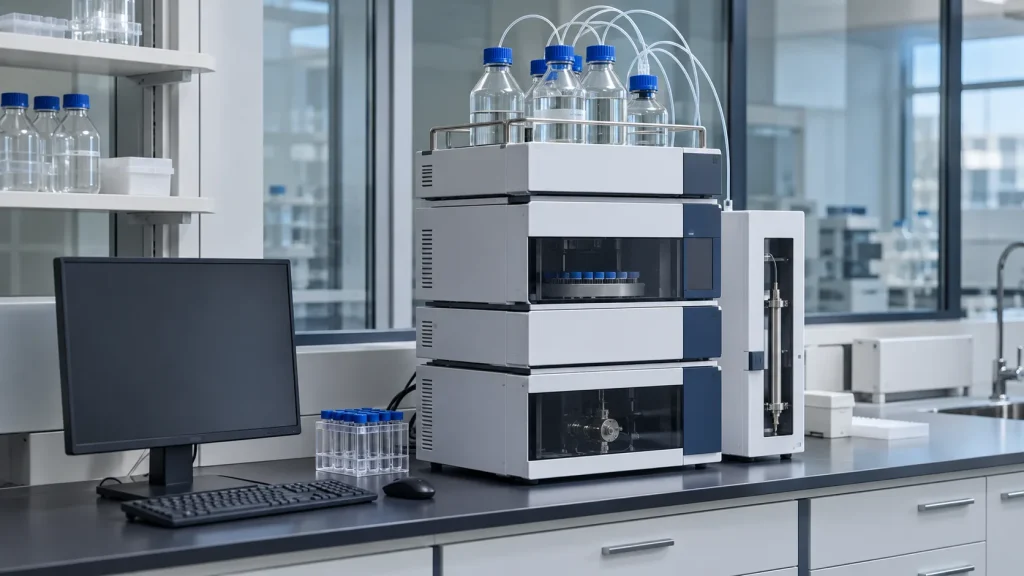
Choosing between HPLC and UHPLC is rarely settled by a single pressure rating. The better question is whether a proposed system can run the methods you have, deliver the separation you need, and remain supportable in your laboratory. A fast demonstration chromatogram is useful only when it reflects your sample and acceptance criteria.
Begin with the method portfolio
Record column dimensions, particle sizes, flow rates, solvents, detector types, injection volumes, gradient profiles, and the methods that must be transferred without change. If a legacy method is fixed by a pharmacopoeial or internal procedure, treat the allowed adjustment range as a constraint. The USP’s chromatography chapter is a primary reference for compendial work; check the current applicable text and your own method before claiming equivalence.
Compare the whole flow path
Ask for pressure ratings across the pump, mixer, injector, column oven, and detector connections. Consider dwell volume, extra-column dispersion, solvent compatibility, carryover, and temperature control. These factors can change a transferred method’s behavior even when the nominal column and gradient look similar. Confirm that the detector and data system can produce the reporting outputs your team actually needs.
Request a meaningful acceptance run
Use a representative sample set that includes likely matrix effects, blanks, and a system-suitability sequence. Agree in advance on resolution, retention-time stability, repeatability, carryover, and reporting requirements. A vendor may offer a different method that works well, but that is a method-development proposal, not proof that your current method transfers unchanged. The Eurachem validation guide is helpful when framing performance characteristics and documenting evidence.
Plan the less visible costs
Column inventory, solvent consumption, seal and lamp replacement, data-system licenses, training, and service response can dominate the experience after installation. Ask for a list of required consumables and software dependencies for a typical year of operation. Keep the quote tied to an exact configuration and method workload.
FAQ
Does UHPLC automatically improve every method?
No. The benefit depends on the method, column, detector, system volume, and what changes the method permits.
Can an HPLC method move unchanged to another system?
It may, but that is an empirical question. Run transfer and suitability checks on the proposed configuration before committing to the claim.