
INSTRUEX / INSIGHTS
Specifying ICP-MS Around Your Analytes and Matrices
Compare interference control, quality checks, preparation, and operating requirements with real sample data.
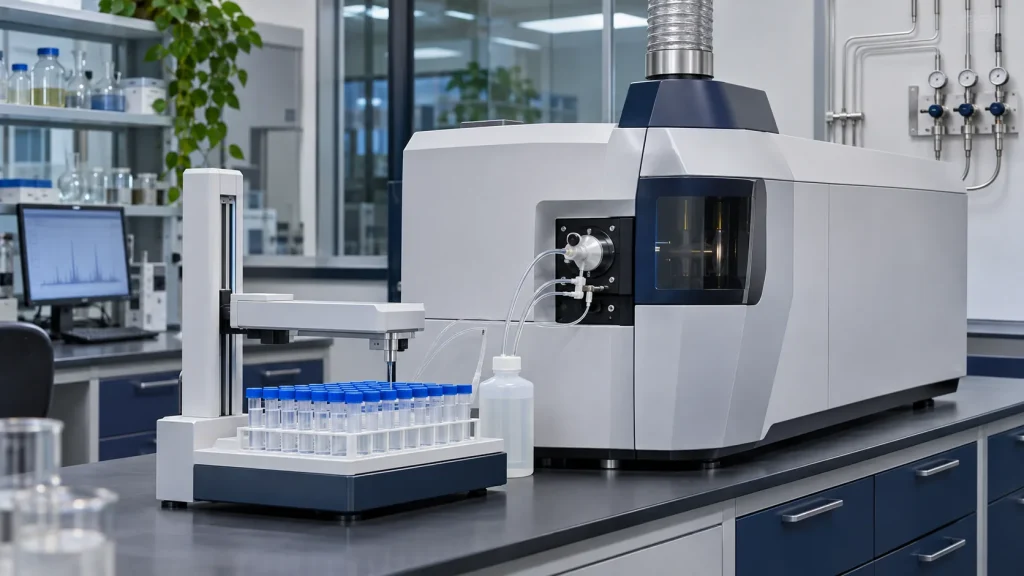
ICP-MS specifications can look decisive: a low detection-limit figure, a list of elements, and a high sample-throughput claim. In practice, the right configuration depends on the matrix, analytes, concentration range, interferences, and preparation workflow. The sample you introduce to the instrument matters as much as the instrument headline.
Build an analyte-and-matrix table
For each sample family, list target elements, expected and reporting ranges, preparation chemistry, dissolved solids, and required turnaround. Separate routine samples from occasional difficult matrices. This table gives vendors something concrete to test. It also reveals whether one configuration can cover the workload or whether sample preparation is the limiting step.
Make interference control visible
Ask how the proposed system handles spectral interferences for your analytes and matrix, and what correction or cell strategy will be used. A vendor should show the method, monitored isotopes, internal standards, blanks, quality controls, and acceptance criteria on representative samples. The US EPA’s Method 6020B documents interference and quality-control considerations for an established ICP-MS method. It is a useful technical reference, but it is not automatically the method your laboratory must use.
Price the complete operating workflow
Include autosampler capacity, fume and exhaust requirements, gas supply, cooling, cones, pump tubing, standards, maintenance, service, and data review. An instrument with a rapid acquisition cycle may still be constrained by digestion, dilution, or analyst review. Request a realistic sequence time for your sample set, including calibration and quality-control injections.
For acceptance, bring real matrices at both ends of the working range. Agree on recovery, precision, blank, and interference checks before the demonstration. If the method must meet a specific regulation or accreditation requirement, have your quality lead review the final protocol.
FAQ
Can a brochure detection limit predict our reporting limit?
Not reliably. Sample preparation, dilution, matrix, blanks, and method criteria affect the laboratory’s reporting limit.
Is sample throughput just the number of injections per hour?
No. Include preparation, calibration, quality-control checks, repeats, and data review in the estimate.